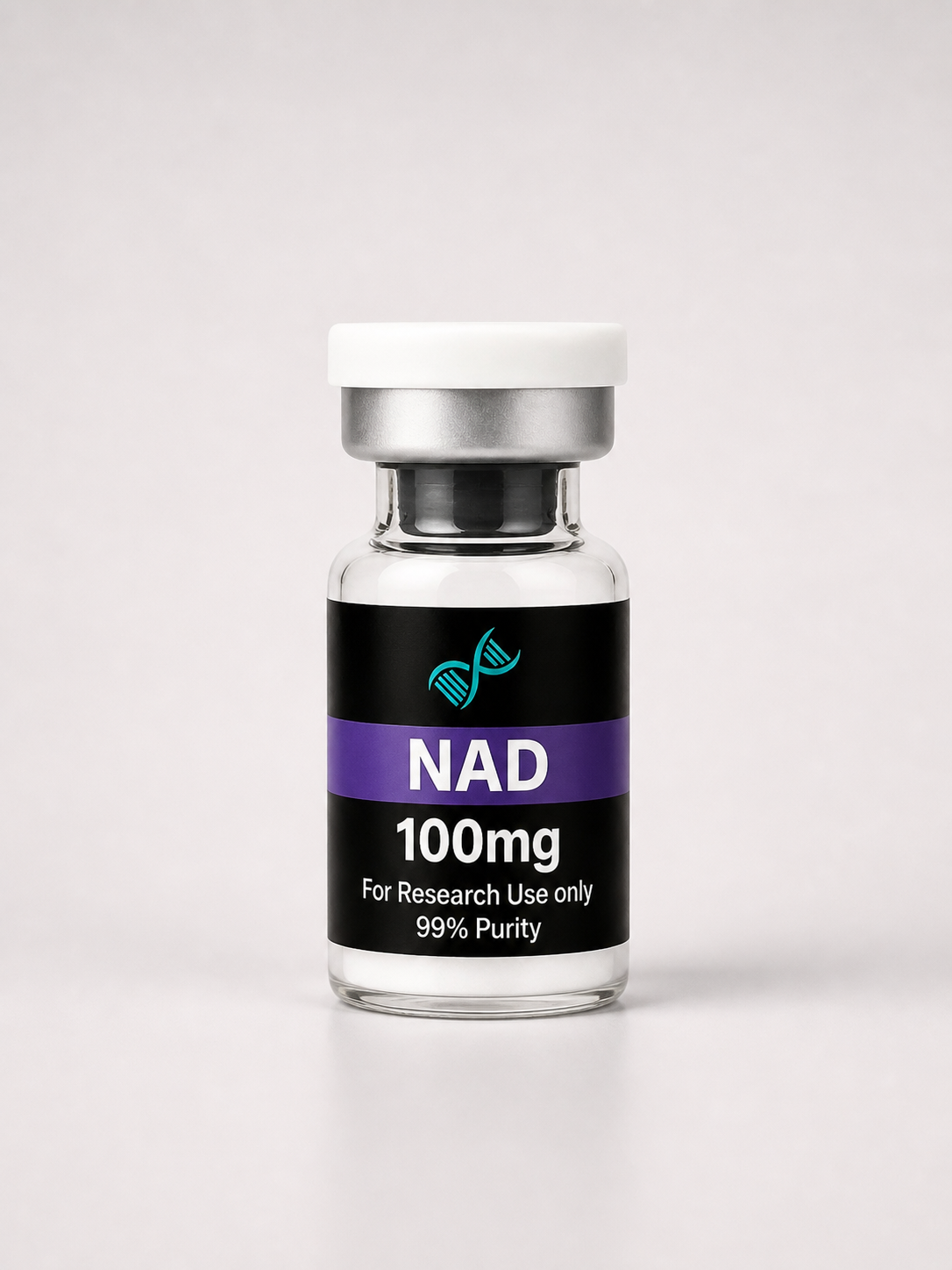
NAD 100mg
Spend More, Get More
Primary Research Benefits of NAD⁺
NAD⁺ (Nicotinamide Adenine Dinucleotide) is a central metabolic coenzyme present in every living cell. It is essential for energy production, DNA repair, cellular signaling, and longevity‑related pathways. Research interest in NAD⁺ continues to grow due to its broad role in cellular health.
1. Cellular Energy Production & Mitochondrial Function
This is NAD⁺’s most fundamental and widely studied role. Preclinical research shows NAD⁺ is required for:
ATP production through oxidative phosphorylation
Redox cycling (NAD⁺/NADH balance)
Mitochondrial efficiency and resilience
Cellular energy metabolism under stress
This makes NAD⁺ a cornerstone molecule in bioenergetics research.
2. DNA Repair & Genomic Stability
NAD⁺ is a required substrate for PARP enzymes, which are involved in DNA‑damage repair. Research indicates NAD⁺ may:
Support genomic maintenance
Influence cellular stress‑response pathways
Help regulate DNA repair during oxidative or environmental stress
These findings are mechanistic, not therapeutic.
3. Sirtuin Activation & Longevity Pathways
NAD⁺ is essential for the activity of sirtuins (SIRT1–SIRT7) — enzymes linked to:
Metabolic regulation
Inflammation control
Cellular stress resistance
Healthy‑aging pathways
This positions NAD⁺ as a key molecule in longevity research.
4. Metabolic Regulation & Circadian Rhythm Support
NAD⁺ participates in pathways related to:
Glucose and lipid metabolism
Insulin‑sensitivity mechanisms
Circadian‑clock regulation via NAD⁺‑dependent enzymes
These effects remain preclinical and mechanistic.
5. Neuroprotective & Cognitive‑Function Pathways
Research models show NAD⁺ may:
Support neuronal energy balance
Influence axonal repair pathways
Modulate neuroinflammatory responses
Improve cellular resilience in neural tissue
This area is expanding rapidly in preclinical neuroscience.
6. Cellular Stress‑Response & Inflammation Modulation
NAD⁺ is involved in:
Redox homeostasis
Inflammatory‑signaling regulation
Cellular survival pathways
Protection against oxidative stress
These findings contribute to its broad relevance in cellular‑health research.
