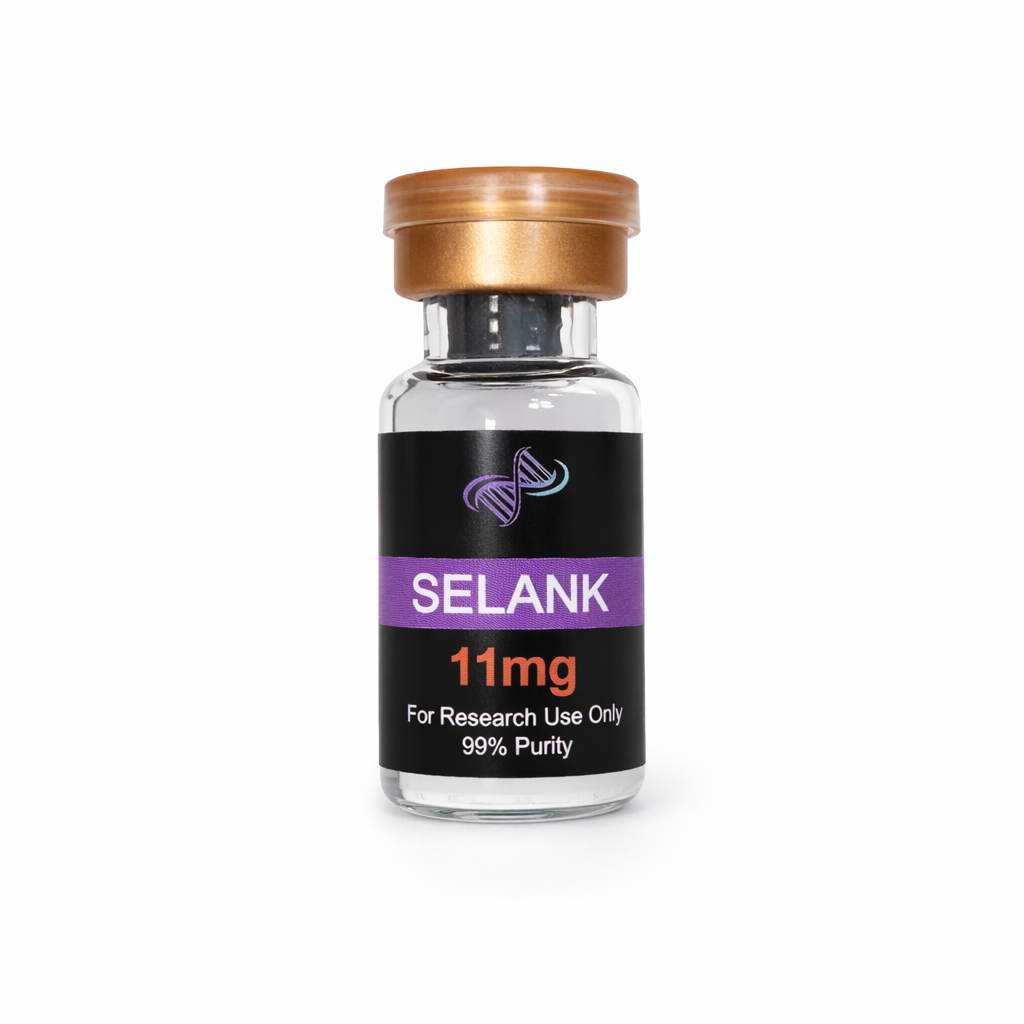

Selank
Spend More, Get More
Primary Research Benefits of Selank
Selank is a synthetic heptapeptide derived from the endogenous peptide tuftsin. Research highlights its role in neuromodulation, stress‑response pathways, and cognitive function through its influence on GABA, BDNF, and monoamine regulation.
1. Anxiolytic‑Like Effects in Research Models
This is Selank’s most widely studied property. Preclinical findings show it may:
Modulate GABAergic signaling
Reduce stress‑induced behavioral changes
Support calm, balanced neurological activity
These effects are mechanistic, not therapeutic.
2. Cognitive Support & Memory Pathways
Research models demonstrate that Selank may:
Enhance learning and memory formation
Support attention and information processing
Influence BDNF‑related pathways
This positions Selank as a peptide of interest in cognitive‑function research.
3. Stabilization of the Stress Response
Selank has been studied for its ability to:
Regulate monoamine levels (dopamine, serotonin, norepinephrine)
Reduce stress‑induced biochemical changes
Support homeostasis during environmental or psychological stressors
This makes it a frequent subject in stress‑biology research.
4. Immune‑Modulating Properties (Tuftsin‑Derived)
Because Selank is based on tuftsin, research suggests it may:
Influence immune‑system signaling
Support balanced cytokine activity
Modulate immune‑related stress responses
This area remains early and exploratory.
5. Potential Antidepressant‑Like Mechanisms
Some preclinical studies show Selank may:
Affect serotonin metabolism
Support neurochemical balance
Influence mood‑related pathways
Again — these are mechanistic observations, not claims of effect.
6. Neuroprotective Pathway Support
Selank has been studied for its potential to:
Reduce oxidative stress markers
Support neuronal resilience
Enhance neurotrophic signaling
These findings contribute to its growing interest in neuroprotection research.
